Translation is all about conveying meaning from one language to another.
But what do we do when we’re struggling with how to render that meaning in our target language?
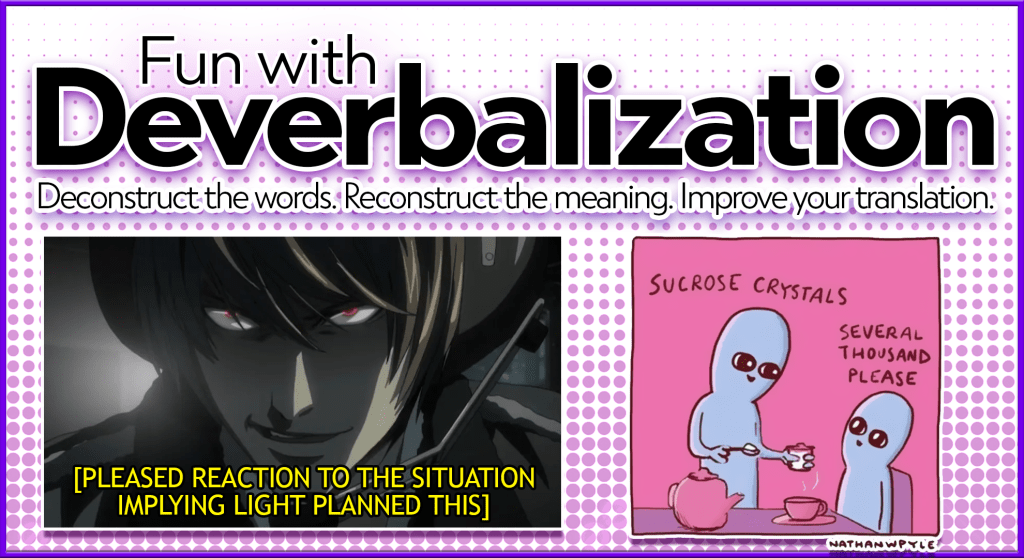
Let’s talk about deverbalization, functionalism, and a few fun ways to use my favorite theory technique, featuring SUBREDDITNAME and the beings from Strange Planet!
WHAT IS DEVERBALIZATION?
Deverbalization is one step in the Interpretive Theory of Translation, established by French scholar and master interpreter Danica Seleskovitch.
The word hints at what it’s about: “de-” as in “remove”, “verbal” as in “words”, “-ization” as in “process”. The process of removing words, to get to the meaning expressed by the sentence.
To deverbalize a sentence, we can start by asking questions about the meaning.
What does the speaker really mean here?
What are they actually saying?
What are they hoping to achieve by saying this?
Why are they saying this?
Let’s practice deverbalization with an example encounter you’ve probably been through hundreds of times.

Would you like your receipt?
No thanks, I’m good.
We already know the customer doesn’t literally mean they are “a good person”, or that they wish to express “zero thanks” to the cashier. So, what do they MEAN when they say “No thanks, I’m good?”
This one’s simple: “I do not want my receipt.”
We can tack on some other observations too, such as “The customer is being polite and casual”.
Let’s try another.

XKCD 2402, specifically referencing the COVID vaccine.
The humor here comes from the doctors interpreting the first comment literally, but we know that’s not what he meant. He actually clarifies for us in the last panel!
“Inject this directly into my veins.”
-> I am very excited about this and want it very badly.
(Quick aside: Hyperbole is very common in American English! If you’re American, you probably use hyperbole all the time: “a million times”, “I could sleep forever”, “This is god-tier coffee”, etc. We also see hyperbole and extremes used in a lot of our humor… and our humor riffing on our love of hyperboles, too.)

Let’s try an example from Japanese to English, this time, with an example from The Apothecary Diaries, Episode 2.
Context: Maomao, a new servant, is being introduced to her concubine mistress.
今日からよろしくね。
よろしくお願いします。
If you speak Japanese, you already saw the よろしく coming! This phrase can be used in a lot of different situations, and its meaning can vary!
First, let’s start with the first line.
What is Gyokuyo saying to Maomao?
Why is she saying it like this?
What is she trying to convey?
Here’s how I would deverbalize it:
She’s being polite, but also casual, fitting of her higher station (no お願いします.)
She’s establishing her good will for her new servant.
This is a form of welcome, since she will only say this at their first meeting.
She’s very pleased her servant is here, and is showing her respect.
But not TOO much respect, because she’s in charge.
We can continue this line of thought when deverbalizing Maomao’s response.
Why did Maomao respond the way she did?
Maomao is being very polite and following social graces.
She is acknowledging Gyokuyo’s welcome and show of respect.
She is showing her respect and willingness to serve.
DEVERBALIZATION AND REFORMULATION
So! Now that we’ve picked apart these よろしくs and figured out what they mean, let’s move on to the next step in the Interpretive Method: reformulation.
Again, hints in the word: “re-” as in “again”, “form” as in “shape”, and “-ulation” as in “process”. The process of giving this meaning shape again – putting it back into words.
When we reformulate meaning, we shouldn’t look at the original Japanese words. That would defeat the whole purpose of deverbalization!
Instead, let’s focus on these meanings we derived, and think about how we can express these same meanings in our target language (English).
First, Gyokuyo’s polite welcome, part of her introduction, befitting her status of a mistress. How would she say this in English?
Glad to have you as part of my retinue.
I look forward to seeing you around the palace.
I’m happy to have you here.
Then, Maomao’s response: acknowledging, showing respect, following social graces befitting of her station. How would she respond in English?
Thank you, Mistress.
The pleasure is all mine.
Pleased to be of service.
(What other ways can you reformulate this? Give it a shot!)
Let’s see how the official translation handled this.
You might have noticed that, as we were going through those deverbalization examples above, one common theme kept coming up: why are they saying this? What’s the reason?
Oh, functionalism, you sneaky bastard! Where did you come from?!

Functionalism is focused on the function of words in translation.
For example, when an advertisement says “The #1 Toothpaste in America!”, the function is to make the reader think more highly of the toothpaste in question, and maybe even buy it.
(It’s a lot more complicated, but for today, let’s just focus on how functionalism… functions… with deverbalization.)
Let’s go back to the Apothecary Diaries example above.
What if, instead of reformulating the meaning and function into natural speech, we made it as blunt and straightforward as possible?
Distilling words and meaning down to their function can sometimes be very funny, especially when you consider how weird and robotic it can make the most mundane things seem.
It can also help you understand the meaning and function of an exchange better – and make you laugh a little, too.
When I think of deverbalization, I always think of Nathan Pyle’s “Strange Planet” webcomic.
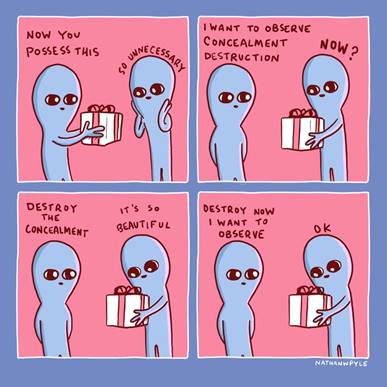
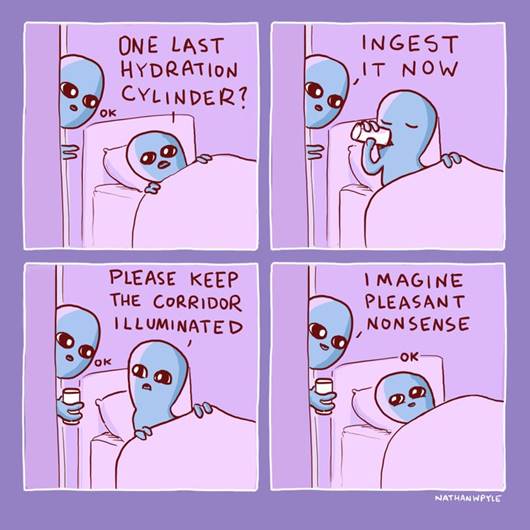
The comic’s humor comes from its presentation of mundane situations described as literally (or functionally) as possible, with unconventional words, too.

One fun way to exercise your deverbalization brain: try to come up with what the Beings would actually be saying in English. (“Remorse” is most likely “Sorry!”).



Moving along to something similar, but slightly different: satirical subreddit r/SUBREDDITNAME.
The Subreddit satirically mocks common types of posts or comments made on Reddit and other platforms. They do this by distilling these common things down to their most basic functions.
Here’s one example.

Satire about Tumblr post chains (specifically pre-2015’s formatting change), specifically Internet commenters making puns about the original poster’s content, and other commenters reacting to said puns.
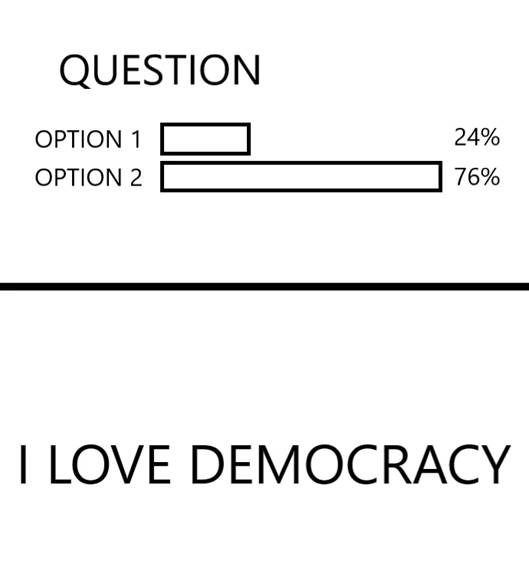
Captioned with “OPTION 2 GOOD”. Satire about online polls, and hyperbolic (?) declaration of love for the democratic polling process.

Satire of… a common meme format you’re likely familiar with.
Through this, we can clearly see the function of memes like these: dunking on people op ‘dosent’ (sic) like.
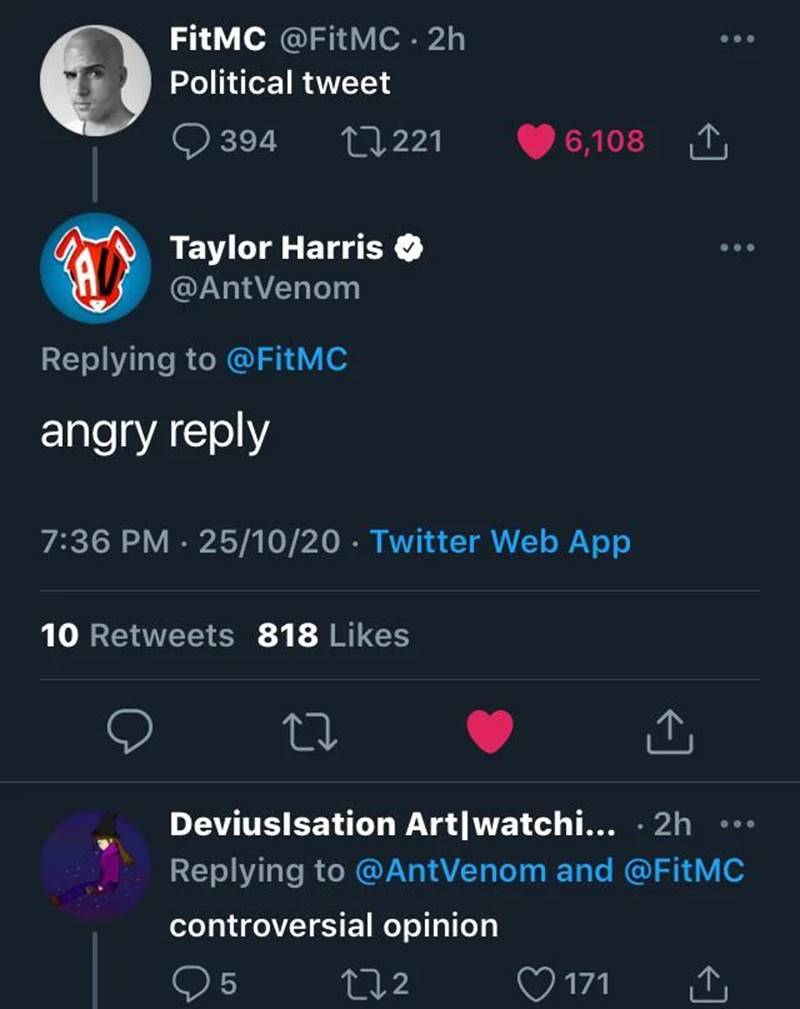
And one of my favorites: satirical tweet with responses, each post distilled down to a description of what they are.
Next example, following the same kind of satire: one of my favorite YouTube videos of all time, Academy Award Winning Movie Trailer.
Differences are surfacing between us!
Accusations about your sexuality!
Lead female’s name!
Naive yet inspiring statement.
Specific outlining of your major character flaws!
OVERREACTION.
PASSIONATE PLEA!
Whispered repetition.
(Okay, now that that’s out of my system…)
This video lives rent-free in my translator head, and I’ve definitely used it to help me work out how to render difficult sections of dialogue in English.
I picked a random scene from Gushing Over Magical Girls to give it a try.
Silly as it is, when compared to my final subtitles, you can see how breaking it down like this helped me make specific translation decisions, such as putting emphasis on Kaoruko’s repetition, Haruka’s frustration, and Sayo’s fretting at the end of the clip.
CONCLUSION
If you’re looking for a tool to add to your Translator Toolbox, I can’t recommend deverbalization enough. It’s helped me endlessly when trying to phrase a long run-on sentence for short subtitles, or when I want a character to speak naturally for a dub.
Next time you’re stuck, give it a try – I guarantee it won’t leave you speechless.
ADDENDUM: DEVERBALIZATION FOR DERIVING MEANING

Wait, you can use deverbalization when you don’t understand what the hell is going on? Absolutely!
When I’m confused about what a complicated line of dialogue might mean, I remind myself of two maxims:
- The author meant for this dialogue to make sense.
- The author meant to write this dialogue this way.
(Of course, sometimes the author wants to be intentionally confusing, but that’s another case entirely.)
When that happens, I go back to my tried and true deverbalization questions:
Why is this character talking right now?
What is it they’re trying to do?
What is the greater context?
Why might they be mentioning certain words, incidents, or phrases?
Finding answers to these questions helps me puzzle out what’s going on, and get to the root of what the character’s saying.
Try it yourself, next time you’re struggling to parse a line with difficult grammar!
 Katrina Leonoudakis