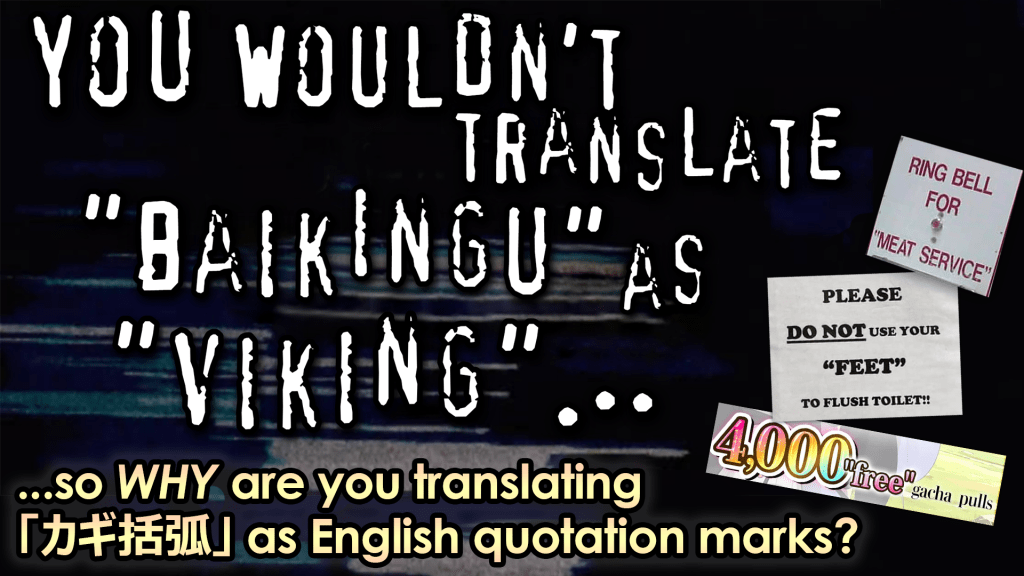
You wouldn’t translate a car’s ハンドル as “handle”.
You wouldn’t translate a ハイタッチ as “high touch”.
So why would you translate 「」 as “”?
True facts: 99% of the time, you shouldn’t, and here’s why.
Read more: Translating カギ括弧: You’re doing it “wrong”.If you’ve ever learned a language, you know about false friends: words that sound like English words, but mean something totally different.
If you’re embarrassed in Spanish you don’t say “estoy embarazado”…
Because that means something totally different.
(Unless you’re in the omegaverse.)
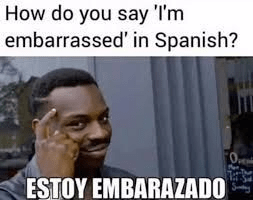
So what DO you say if you want to say you’re embarrassed in Spanish?
You say the words that actually MEANthat you’re embarrassed.
Me da vergüenza.
It gives me embarrassment.
The literal translation is very different, but the meaning is the same.
This concept — of meaning being more important than the lexical words — is vital to translation.
In translation theory, many times, we seek to create a translation that has the same, or equal, meaning as the original.
We call this equivalence.
Equivalence is important, because language is very complicated, and we don’t always mean exactly what we say!
When a Vtuber says “I’m so cooked.”, they’re not actually being heated and prepared for consumption. What is the meaning they are actually expressing?
(Try this exercise yourself!)
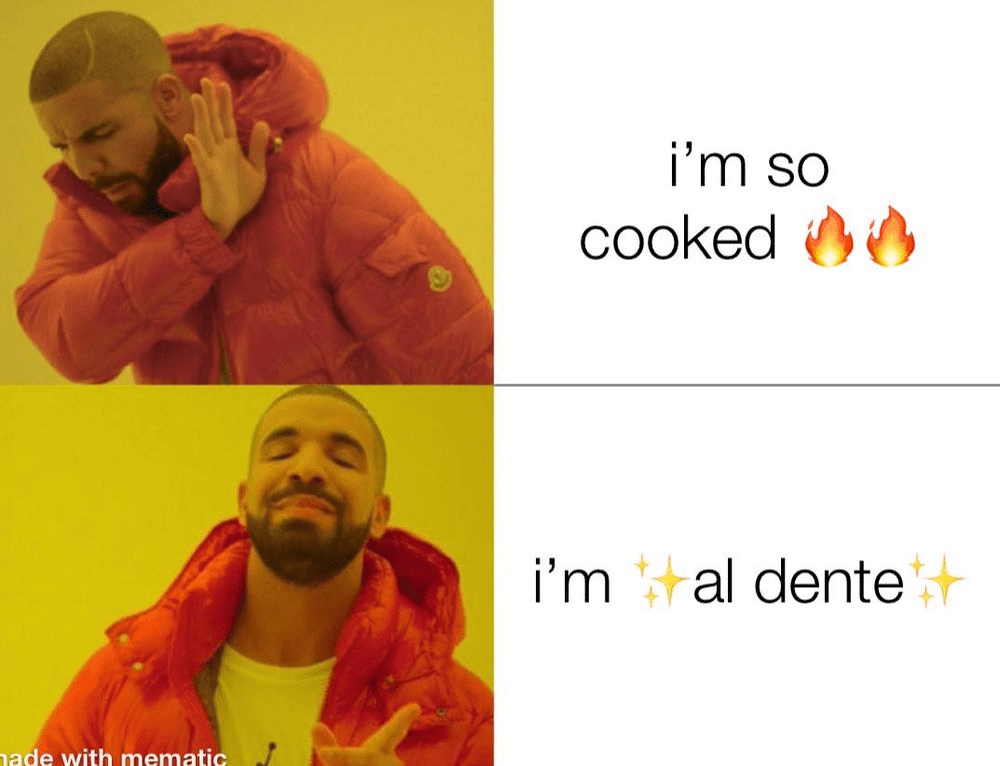
A good translator would understand the meaning being expressed, then create a translation that expresses an equivalent meaning.
In Japanese, I might say 「やばい、終わったーw」
“Oh damn, it’s over lol.”
(Instead of the literal translation 「調理された」. )
(for more on Equivalent Meaning, here’s an essay I wrote about 天才 and “genius” – two words that mean different things in Japanese and English, that aren’t always equivalent!)
Now that you’re familiar with the concept of equivalence, let’s take a look at something we’re all familiar with: English quotation marks.
What does it mean when text is enclosed in quotations marks?
What’s the difference between I’m cooked and “I’m cooked”?
(Try to answer yourself before reading on!)
In English, a quotation mark can have several different meanings, depending on context!
They indicate direct speech or quotations: She said “I’m cooked.”
They highlight the titles of short works: I read the article “I’m Cooked”.
They express irony or humor: I’m “cooked”, chat.
Notice how above, we used a verb to talk about what it is that quotation marks do.
That’s because they’re punctuation marks. They don’t have meaning on their own, but they have a function that applies to the text they modify.
What’s that? Is that the word… function?
Oh… oh, here it comes!
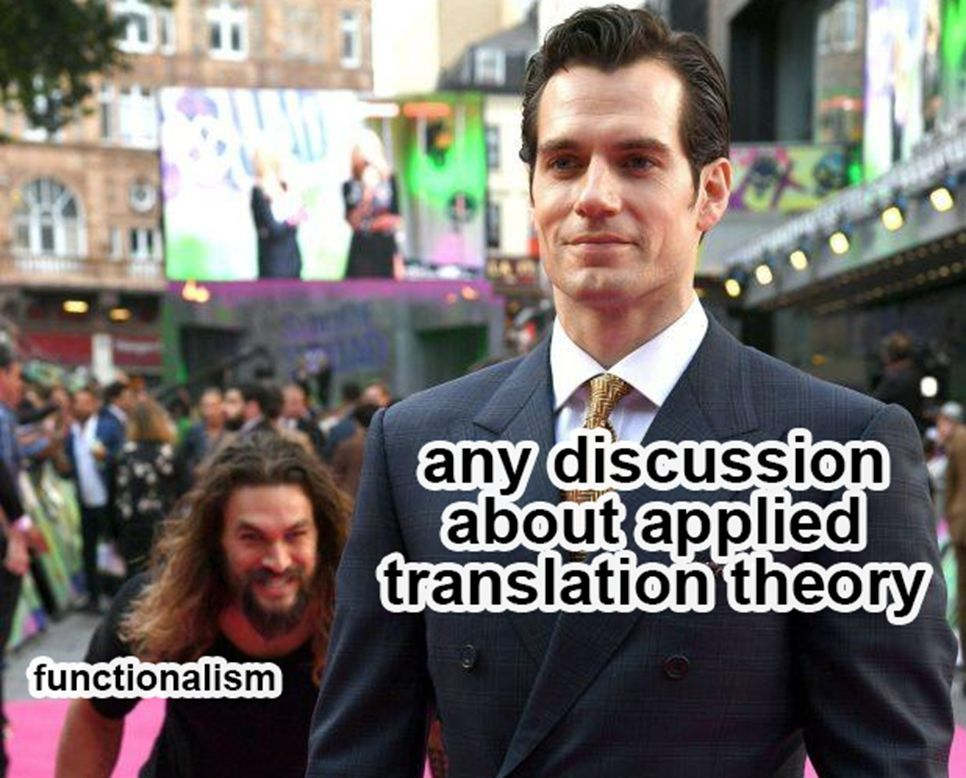
Functionalism is a concept in translation theory that states that a translation should function equivalently to the source.
For example, a Japanese recipe, when translated to English, should instruct the reader to create the exact same dish. The amounts might need to be converted from metric to imperial, but it will still function the same as the original.
Get it? Got it? Good.
I’m about to blow your mind.
In the same way that バイキング and “viking” mean two different things…
Japanese kagi kakko 「」and English quotation marks have two totally different functions.

“But Katrina,” you say, “when I read light novels, all of the dialogue is in kagi kakko!”
「Yes, that’s true,」 I respond, 「Japanese kagi kakko can be used to indicate direct speech or quotes.」
But just like English quotation marks, Japanese kakko have 「other」 functions, too.
For example…
Kagi kakko can be used to encapsulate a thought that is not spoken out loud.
「日本語、諦めよう」と考え始めた。
(In English fiction, we’re likely to use italics for thoughts, but quotation marks are OK, too.)
Kagi kakko are very often used to emphasize a particular word or phrase within a sentence.
日本人は「本音」を隠し、「建前」を話す。
Kagi kakko are also used for titles or product names.
弊社の新商品「ミラクルクル」を紹介いたします。
Now that we know how kagi kakko function, let’s see how we might translate the following.
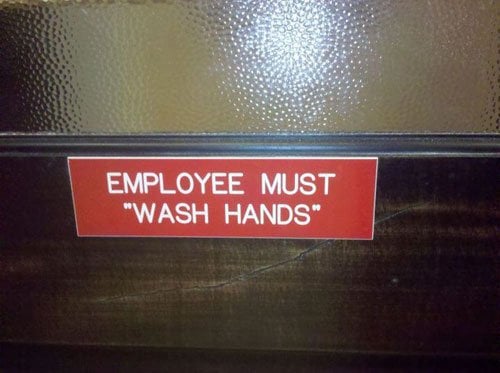
従業員は必ず 「手を洗う」 こと
Wait— wait, I just explained that they function differently someti—-
God dammit, guys, I just explained it.
Any English speaker sees the issue here: quotation marks can mean sarcasm or irony.
Putting quotation marks around “wash hands” cheekily implies that they’re doing something else… or just not washing them at all.
This kind of problem happens so often, there’s a whole subreddit for it.
Here are a few bangers.
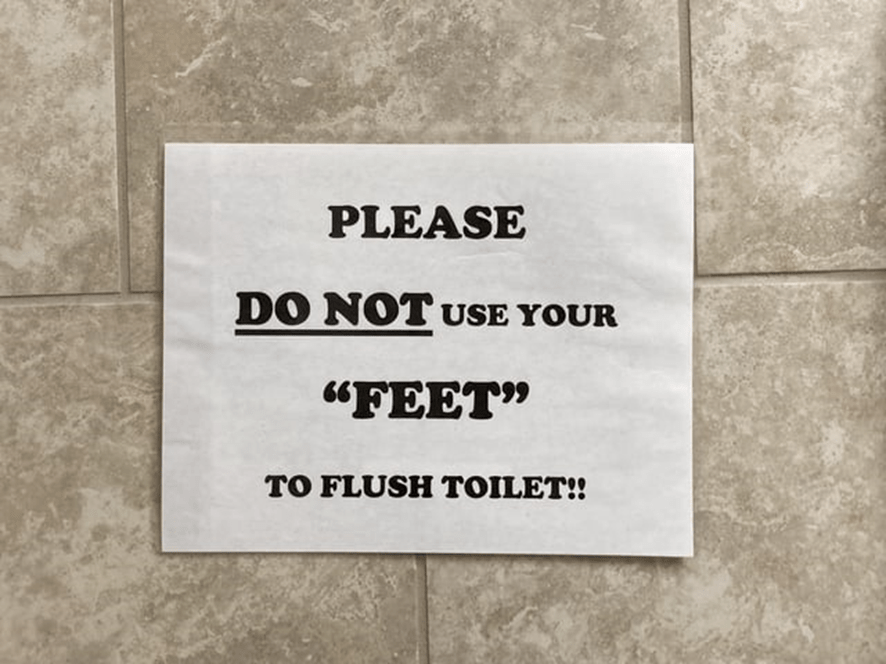
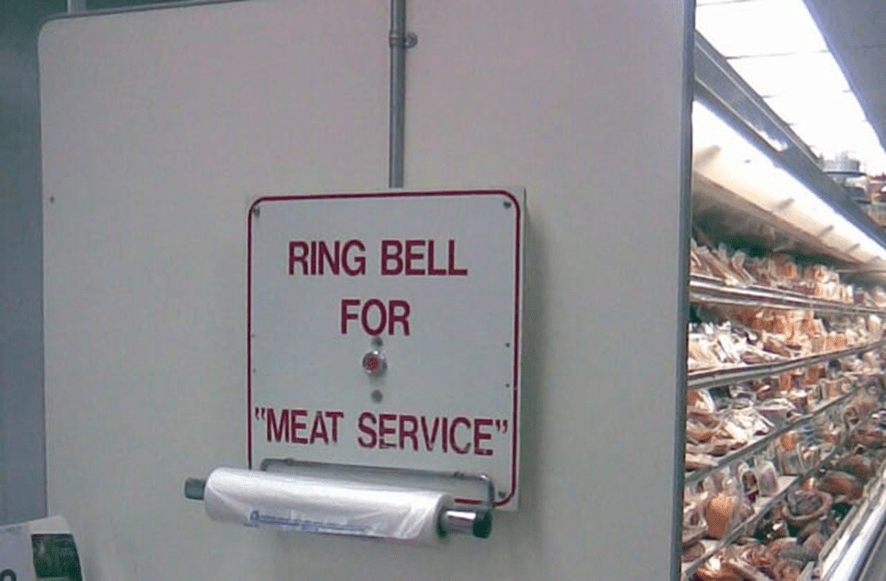

It’s clear what the writers intended to do with the quotation marks – use them to emphasize something – but because of how quotation marks actually function in English, the meaning gets completely distorted.
「But Katrina,」 you say, 「the kagi kakko are right there! Am I supposed to just, like, not have the punctuation in my translation?」
Let’s stop and think! How are the kagi kakko functioning in this sentence:
経験貯めると「レベルアップ」できる!
They’re not quoting someone, no one’s thinking, and this isn’t a product.
So most likely, they’re being used to emphasize this レベルアップ thing.
Quotation marks in English can’t really be used to emphasize things… so what can we do?
How would we emphasize things in English?
We could use bold lettering, or ALL CAPS, or Title Case, if the Thing is Important.
We could change fonts or colors.
Gain enough experience and you’ll LEVEL UP!
We could also just leave it out all together, and write the sentence in a way that emphasizes the point.
Gain experience to level up!
That’s right, friends: you can just leave the extra punctuation out, because it doesn’t function the same way in English.
Surprised you have to translate punctuation?
You already do, every time you change a 。 into a period!
Just because they’re similar, doesn’t make them equivalent.
Just like ストーブ and 「stove」, they might just be false friends!
So remember: false friends are hiding everywhere!
Focus on translating meaning and function.
And always think before and after you translate!
Else, you might end up translating something completely incorrectly… or “correctly”.
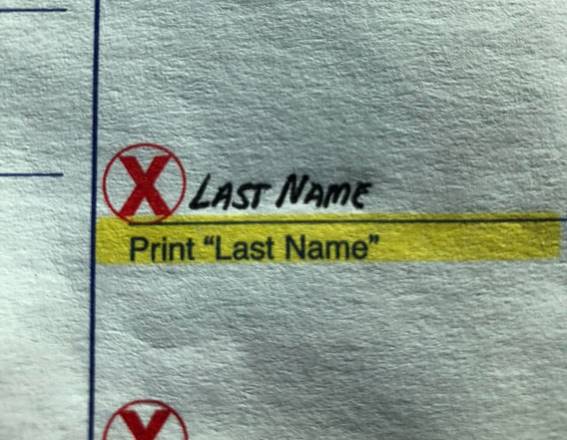
ADDENDUM: The many different types of 括弧
Kagi kakko are the most common, but there are plenty of other exotic kakko that make their way into Japanese writing – and each have their own particular uses.
For example, at my company, nijuu kagi kakko 『』 are used for the names of series (『ペルソナ』, while regular kagi kakko 「」 are used for individual game titles (「ペルソナ5」).
There’s also sumitsuki kakko 【】, which are typically used for headlines or at the beginning of email subject lines.
【最新】11月スケジュールの乱れについて
And yama kakko <>, which are also used for emphasis.
本日は<大安売り>の特売日です!
There’s also nijuu yama kakko 《》 for even MORE emphasis.
本日は《月に一度》の特売日です!!
If you want to learn more about the many types of 括弧, check out this great writeup in Japanese: https://www.fumitei.jp/brackets/
 Katrina Leonoudakis